

Concrete Moisture Testing in the Greater Toronto Area
Rapid moisture testing services
Concrete Moisture Testing
Concrete moisture testing plays a critical role in the long-term performance of floor coverings and coatings. When excess moisture remains inside a concrete slab, it can migrate to the surface over time. As a result, flooring systems may suffer from adhesive failure, blistering, mold growth, or deterioration of materials. Therefore, contractors must evaluate slab moisture before installing flooring. Accurate testing allows project teams to confirm whether the concrete has dried sufficiently or whether additional drying or moisture mitigation is required. In addition, proper concrete moisture testing helps prevent costly repairs and protects indoor air quality. Most importantly, it ensures that flooring systems perform as intended throughout their service life.
To support these requirements, J.T. Donald Consultants provides several industry-standard concrete moisture testing methods. Each method addresses different project conditions and flooring system requirements.
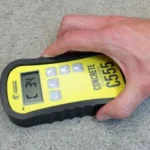
ASTM F2659 – Electronic Moisture Meter
ASTM F2659 evaluates the comparative moisture condition of concrete floor slabs using a non-destructive electronic moisture meter. During testing, technicians place a calibrated electronic meter directly on the concrete surface. The meter measures electrical properties within the slab that correlate with near-surface moisture levels. Next, technicians take multiple readings across the floor area. These readings help create a representative picture of moisture conditions across the slab. Because this method is fast and non-destructive, ASTM F2659 works well as a preliminary screening test.
It helps identify areas with elevated moisture and determine where additional testing—such as in-situ relative humidity testing—may be necessary before installing moisture-sensitive flooring.
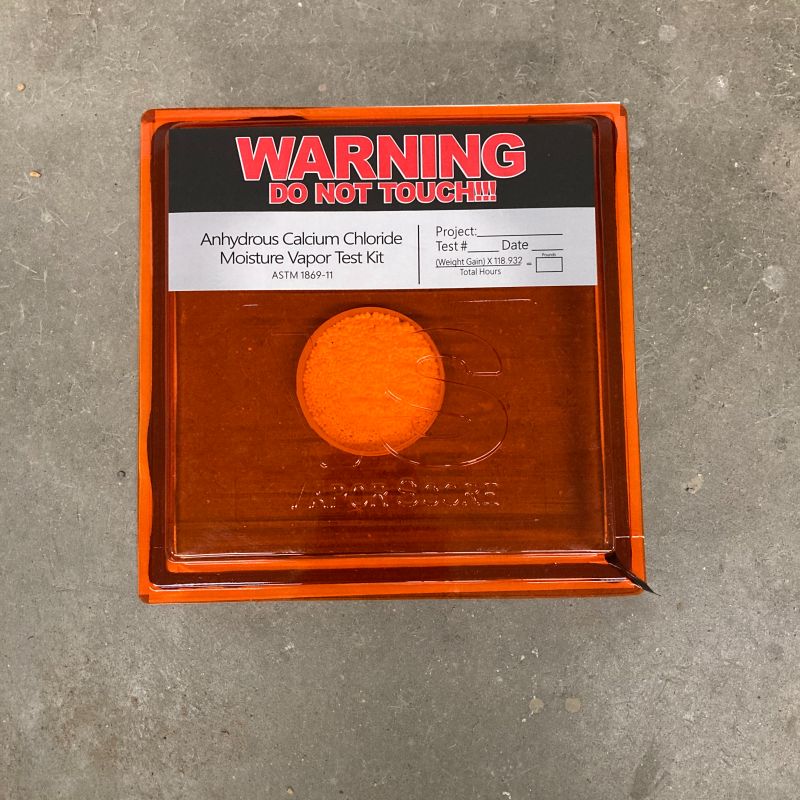
ASTM F1869 – Anhydrous Calcium Chloride
ASTM F1869 measures the moisture vapor emission rate (MVER) from concrete floor slabs using an anhydrous calcium chloride test. First, technicians place a pre-weighed dish of calcium chloride on a prepared section of the concrete surface. They then seal the dish beneath a plastic dome. The test remains in place for a specified period, typically 60 to 72 hours. During this time, the calcium chloride absorbs moisture vapor released from the concrete. After the exposure period, technicians weigh the dish again. The weight gain allows them to calculate the moisture emission rate. Results are reported as pounds of moisture per 1,000 square feet per 24 hours.
Flooring manufacturers often use this value to determine whether a concrete slab has dried enough to support moisture-sensitive floor coverings and adhesives.
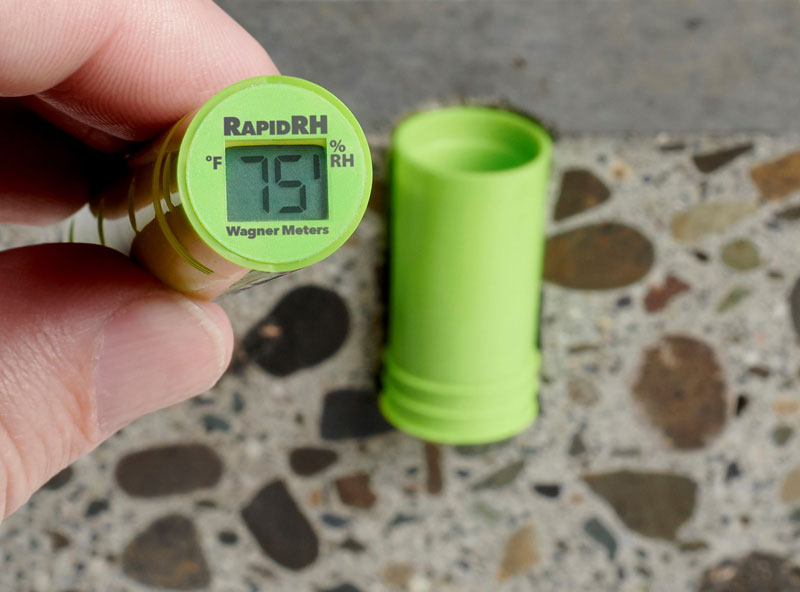
ASTM F2170 – In Situ Probes
ASTM F2170 measures the internal relative humidity (RH) of concrete slabs using in-situ probes. To begin the test, technicians drill holes into the concrete slab to a specific depth. For slabs drying from one side, the holes typically extend to 40% of the slab thickness. Next, technicians insert a sleeve containing a calibrated RH sensor into each hole. After the probes equilibrate with the surrounding concrete, technicians record the internal relative humidity and temperature. These readings provide a reliable measurement of the slab’s internal moisture condition. Compared with surface testing methods, ASTM F2170 provides a more accurate indication of long-term moisture behavior.
Consequently, many flooring manufacturers require this test before installing moisture-sensitive flooring systems.
Construction Material Testing
Mortar and Grout
Compressive strength testing of cementitious cubes
Roofing
Inspection of roofing material application
Asphalt
Compaction testing and laboratory determined Marshall stability and flow parameters
Waterproofing
Inspection of application
Fireproofing
Inspection of sprayed-on and intumescent fireproofing and fire stops
Structural Steel
Inspection of structural steel and deck installation
Aggregate
Compaction testing of granular fills, laboratory sieve analyses and Proctor Compaction Tests
Rebar
Inspection of reinforcing steel installation
Concrete TESTING
Field and laboratory testing of physical properties of plastic and hardened concrete
Pull Testing
Pull testing of masonry anchors and membranes
Guardrails
Load testing of railings
Concrete Moisture Testing
by J.T. Donald Consultants Limited
340 Don Park Road, Unit 10
Markham, ON L3R 1C5
416-751-5230